
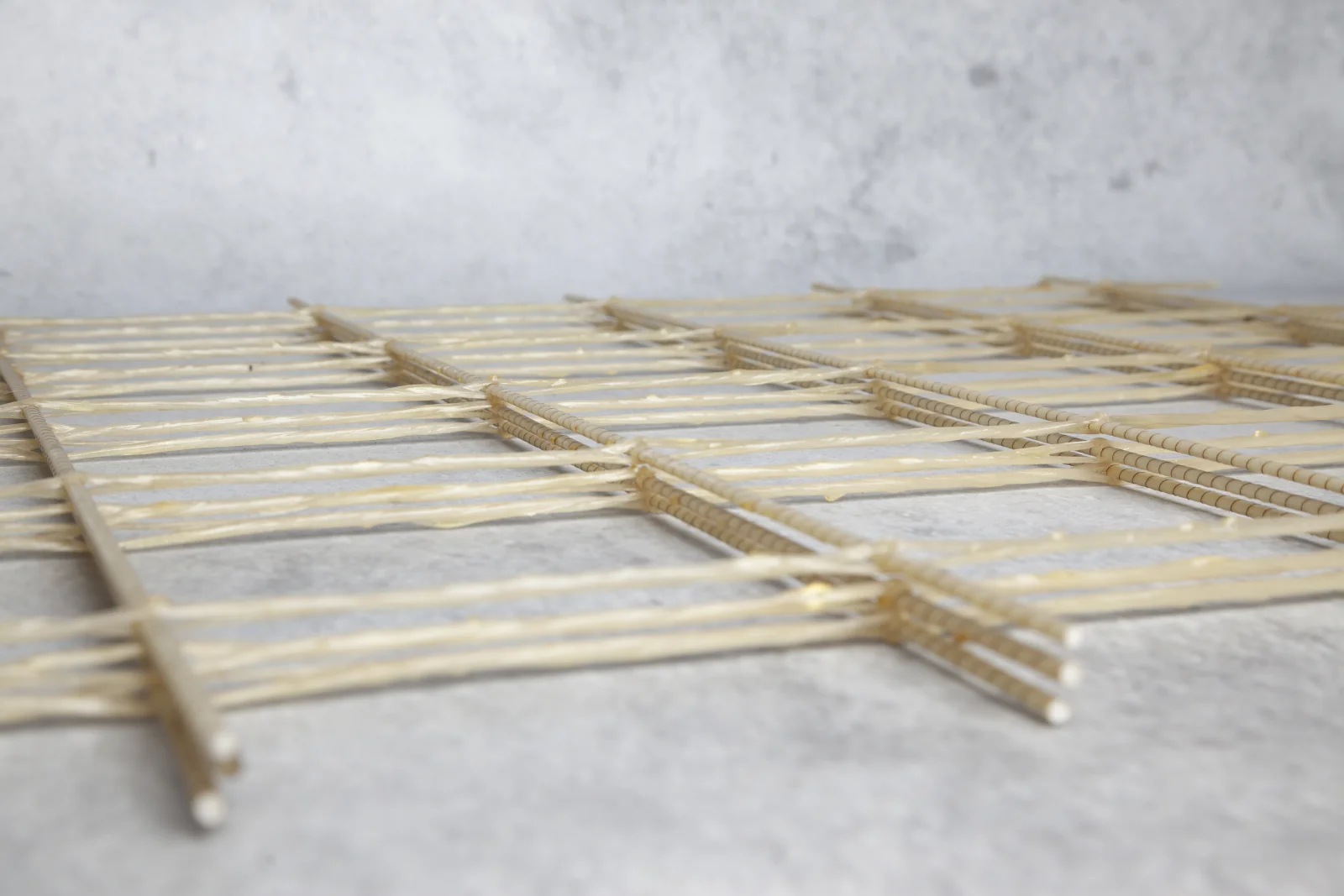
A reliable GFRP reinforcement system requires compatible accessories. Supports, ties, connectors and load-transfer components help you maintain the correct spacing, alignment and concrete cover.
Fiber Dowels supplies lightweight, corrosion-resistant solutions for concrete pavements and infrastructure projects.
Key takeaways
- Use compatible, corrosion-neutral accessories to protect the durability of GFRP reinforcement.
- Main accessory groups include supports, ties, couplers, end caps, dowels and dowel baskets.
- Lightweight GFRP can move during concrete placement, making secure positioning essential.
- Fiber Dowels provides fiberglass dowels and dowel baskets for reliable load transfer at concrete joints.
What Are Fiberglass Rebar Accessories?
Fiberglass rebar accessories are components used to position, secure, connect and protect glass fiber reinforced polymer bars before and during concrete placement.
Typical GFRP rebar accessories include chairs, spacers, ties, clips, couplers and safety caps. Concrete pavement projects can also require load-transfer products such as fiberglass dowels and pre-assembled dowel baskets.
GFRP is lightweight, corrosion-resistant and non-conductive. Accessories should therefore be selected as part of the complete reinforcement system.
For practical fastening advice, read the Fiberglass Rebar Tying Guide.
Why the Right Accessories Matter
Correct accessories keep the reinforcement at its specified height, spacing and concrete cover. This improves installation accuracy and helps the finished structure perform as designed.
Methods used for steel are not always suitable for GFRP. Metallic accessories can reduce the benefits of a corrosion-neutral or non-conductive system. Over-tightened ties may also damage the bar surface, while insufficient support can allow the reinforcement grid to shift.
Choose accessories that:
- Match the bar diameter and reinforcement layout.
- Retain the bars without damaging their surface.
- Remain stable during pumping, vibration and finishing.
- Meet the corrosion and electromagnetic requirements of the project.
Types of Fiberglass Rebar Accessories
Chairs, spacers and supports
Fiberglass rebar supports maintain the correct reinforcement height and concrete cover. Plastic and composite systems are commonly used where a non-metallic solution is required.
GFRP is lighter and more flexible than steel. Use stable supports with positive bar retention and sufficient spacing to prevent sagging, movement or uplift.
Ties and clips
Ties and clips secure intersections and stabilise the reinforcement grid.
Non-metallic cable ties, composite ties and plastic clips help preserve corrosion resistance. Apply controlled tension. A tie should hold the bar firmly without cutting into or crushing the surface.
Efficient fastening systems can also reduce installation time on projects with large numbers of intersections. See the Fiberglass Rebar Tying Guide for more installation guidance.
Couplers and connectors
Couplers provide continuity where lap splices are impractical or where separate concrete elements must be connected.
Connections should be specified during the design phase. GFRP cannot be welded or threaded on site using standard steel methods. The coupler must match the bar type, diameter and required structural performance.
Rebar end caps
End caps cover exposed bar ends and improve jobsite safety. Select a product that matches the intended safety function and applicable project requirements.
Dowels and dowel baskets
Dowels transfer loads across joints in concrete pavements. Correct alignment allows adjacent slabs to work together while maintaining the designed joint movement.
Fiberglass dowels provide effective load transfer without corrosion. Their low weight also simplifies transport and manual installation.
Pre-assembled fiberglass dowel baskets retain dowels at the correct height, spacing and orientation. Their lightweight, stackable design supports faster placement and lower transport costs.
For industrial floors, Fiber Dowels T-FORM combines practical joint preparation with recycled-plastic formwork.
Controlling Movement Before the Pour
Lightweight GFRP reinforcement can lift or shift as fresh concrete moves around the grid. This can affect the specified cover and alignment.
Complete these checks before pouring:
- Confirm bar spacing and reinforcement height.
- Check that chairs and supports are stable.
- Secure critical intersections without over-tightening.
- Add support around edges and congested areas.
- Test the rigidity of the complete grid.
- Monitor reinforcement during pumping and vibration.
Do not rely on the weight of the bars to keep them in position. A stable support and fastening plan reduces corrections during the pour and helps accelerate the construction process.
How to Choose the Right Accessories
Match each accessory to its function, environment and installation method.
| Accessory | Function | Main selection point | Fiber Dowels solution |
| Chairs and spacers | Maintain cover and height | Stability and spacing | Project-specific advice |
| Ties and clips | Secure intersections | Controlled tension | Tying Guide |
| Couplers | Connect bar lengths | Structural compatibility | Project-specific advice |
| End caps | Cover exposed ends | Required safety level | — |
| Dowels | Transfer loads across joints | Size and alignment | Fiberglass Dowels |
| Dowel baskets | Position dowels | Rigidity and installation speed | Fiberglass Dowel Baskets |
| Joint formwork | Prepare concrete joints | Floor thickness and design | Fiber Dowels T-FORM |
Also consider chemical exposure, electromagnetic neutrality, bar size, concrete cover and applicable project standards.
Fiber Dowels can help you select a suitable load-transfer solution based on your drawings and project conditions.
Frequently Asked Questions
What accessories do you need for fiberglass rebar?
Most projects require chairs or supports, spacers and ties. The design may also include couplers, clips, end caps, dowels or dowel baskets.
Do GFRP rebar accessories have to be non-metallic?
Not in every application. Non-metallic accessories are preferred where corrosion resistance or electromagnetic neutrality is important. Always follow the project specification.
What holds fiberglass rebar in place?
Chairs and spacers maintain the required height and cover. Ties or clips secure intersections. Additional hold-down measures may be needed during larger pours.
Why can fiberglass rebar move during pouring?
GFRP is lightweight. Concrete flow, pumping and vibration can move an insufficiently secured reinforcement grid. Stable supports and controlled tying reduce this risk.
Can fiberglass rebar be connected or spliced?
Yes. GFRP can be connected through designed lap splices or compatible couplers. The connection method should be determined during engineering.
Can you use steel tie wire with fiberglass rebar?
This depends on the project requirements. Use non-metallic ties where a fully corrosion-neutral or non-conductive system is needed. Avoid over-tightening any tie material.
Are fiberglass dowels reinforcement accessories?
Fiberglass dowels are load-transfer components. They transfer forces between adjacent concrete slabs while allowing the joint to function as designed.
Need Project-Specific Advice?
The correct accessories improve positioning, installation speed and long-term durability. Combine lightweight handling with corrosion-resistant load transfer for a more efficient concrete project. Get in touch!