
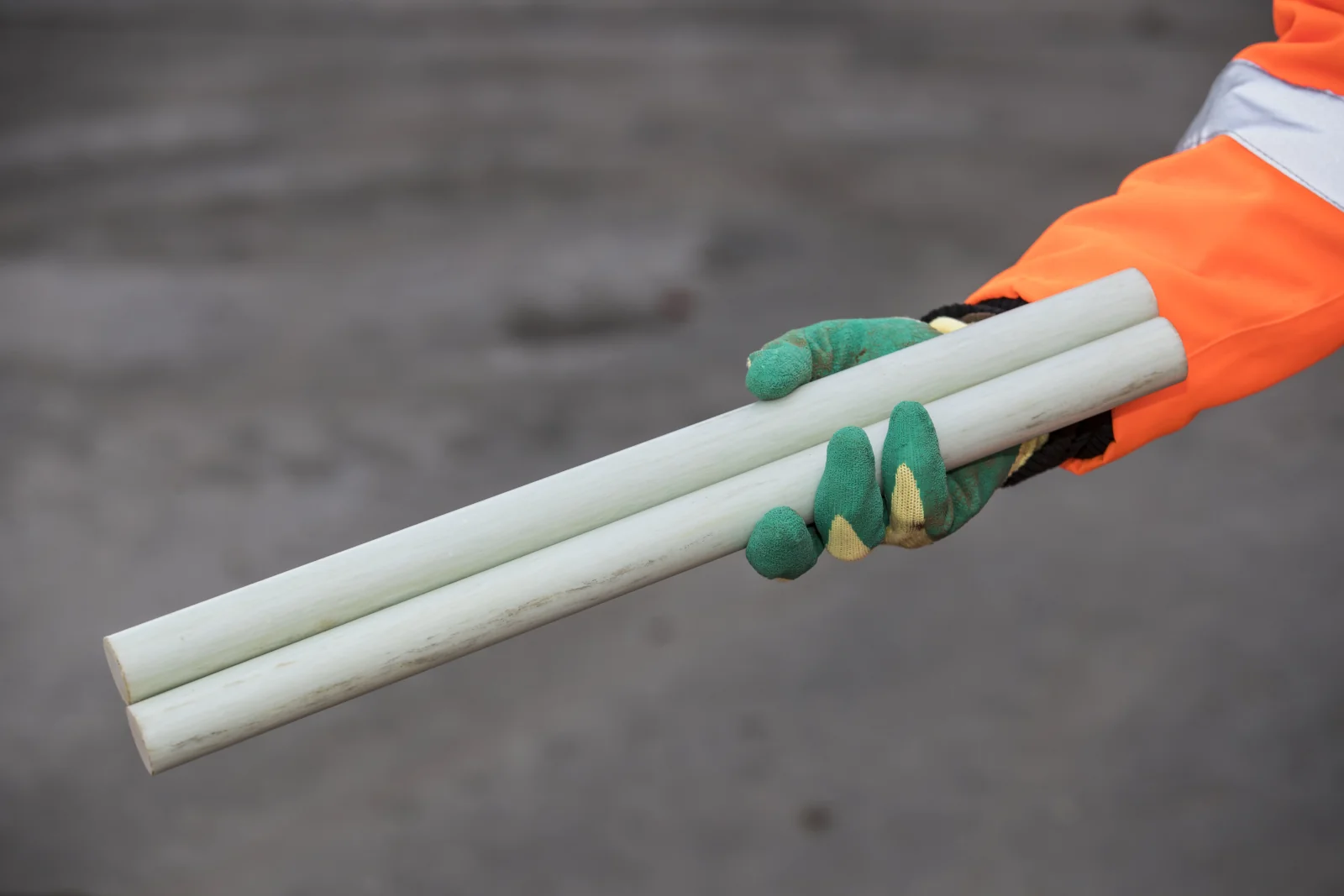
Installing fiberglass rebar correctly starts with the right tying method. In this fiberglass rebar tying guide, you will learn how to keep GFRP bars stable, aligned, and ready for concrete placement without damaging the reinforcement.
Key takeaways
- Tying GFRP is about retaining position, spacing, cover, and alignment during the pour, not about clamping bars as tightly as possible.
- Fiberglass rebar is lightweight, corrosion resistant, non-conductive, and built for long service life in demanding environments.
- Over-tightening, poor support spacing, and rough handling can reduce installation quality on site.
- In roads, bridge decks, parking areas, container terminals, and tram or railway crossings, good tying helps you build faster and more reliably.
What Is Fiberglass (GFRP) Rebar?
Fiberglass rebar, also called GFRP rebar, is a glass fiber reinforced polymer bar used to reinforce concrete. It is especially relevant in concrete pavements and infrastructure where long-term durability matters. Compared with traditional reinforcement, it offers corrosion resistance, lower weight, long service life, and non-conductive performance. Fiber Dowels also highlights that fiberglass reinforcement is up to 4 times lighter than steel and suitable for projects exposed to moisture, chemicals, or electromagnetic influences.
That makes it a strong fit for infrastructure that needs to stay durable with less maintenance over time. For readers comparing options, discover fiberglass vs steel.
Why Tying Matters
Tying fiberglass rebar is not about forcing bars tightly together. It is about keeping the reinforcement in the correct position until the concrete is placed and finished. Good tying helps retain spacing, cover, alignment, and overall cage stability during installation and pouring.
That difference matters on site. GFRP is lighter and behaves differently from steel during handling, so if you overtighten ties, you can create unnecessary local stress or surface damage. A secure tie is enough. The goal is stability, not compression.
Tools and Materials
Use practical tools that support clean and controlled installation:
- Tie wire or plastic ties, depending on the project environment
- A tying tool or wire twister for consistent fastening
- Non-metallic chairs or support systems
- Standard PPE such as gloves, eye protection, and suitable workwear
- Cutting tools only when trimming is unavoidable, and only with care suited to fiberglass materials
For projects focused on speed and cleaner positioning, you can also use Fiberglass rebar baskets or T-FORM.
Prepare the Site
Before you start tying, make sure the basics are right:
- Check drawings, bar layout, and spacing
- Verify bar lengths before installation
- Prepare supports and chairs in advance
- Confirm concrete cover requirements
- Brief the team on proper GFRP handling and placement
This preparation reduces rework and helps keep your installation efficient. Because fiberglass is lightweight and easy to handle, the workflow can be faster, but only when the site is organised properly from the start.
Tie GFRP Step by Step
1. Position the bars
Place the bars according to the drawings and check spacing immediately. Start with a clean, logical layout so adjustments stay minimal during the pour.
2. Add supports and chairs
Install non-metallic chairs and supports early. This helps maintain the right cover and reduces unwanted movement before concrete placement.
3. Place the tie at the intersection
Place the tie neatly at each required intersection. Use enough tying points to keep the grid stable, especially in active work zones or where bars may shift during foot traffic or pumping.
4. Twist until secure, not overtight
Twist until the bars are held in place. Stop once the intersection is secure. Do not overtighten. GFRP tying should prevent displacement, not press into the bar surface.
5. Check alignment before pour
Before concrete placement, inspect alignment, spacing, cover, and support stability one more time. Fixing small issues at this point is faster and more cost-effective than correcting them after the pour.
Support and Cover
Support and cover deserve extra attention with fiberglass rebar. Because GFRP is much lighter than steel, bars can react differently to site traffic, pumping forces, and vibration during concrete placement. In practice, insufficient support spacing can lead to small shifts, uneven cover, or local misalignment before you notice it.
That is why a stable support layout matters. Good chairs, correct spacing, and a final pre-pour inspection help you avoid movement and keep the reinforcement where the design intends it to be. On site, that means fewer corrections, more predictable installation, and better long-term performance of the slab or pavement.
Common Mistakes
The most common installation mistakes are easy to avoid when your team understands the material:
- Tying too tight
- Using the wrong support spacing
- Damaging bars during cutting or handling
- Allowing displacement before or during the pour
- Treating fiberglass like steel instead of as its own reinforcement system
A practical how to tie fiberglass rebar approach always starts with controlled handling and secure positioning, not force. That is one of the main differences between a steel workflow and a reliable GFRP rebar tying guide in the field.
During Concrete Placement
Once the reinforcement is tied, stay alert during the pour:
- Perform a final pre-pour check
- Watch for movement during concrete placement
- Vibrate with care
- Recheck alignment and cover as work progresses
This is particularly important in larger pours or heavily loaded pavement applications, where even small displacement can affect the final result. A stable setup supports faster construction and a more durable concrete structure.
Where This Is Used
This installation method is especially relevant in infrastructure where durability, low maintenance, and corrosion resistance matter. Fiber Dowels highlights applications such as road construction, bridge decks, truck and car parking areas, container terminals, runways and taxiways, and tram or railway crossings. Fiberglass is also non-conductive, which adds value around rail infrastructure and other sensitive environments.
That makes this fiberglass rebar tying guide highly relevant for contractors, project leaders, and engineers working in:
- Road construction
- Bridge decks
- Parking areas
- Container terminals
- Tram and railway crossings
Frequently asked Questions
Can you tie fiberglass rebar the same way as steel?
Not exactly. With fiberglass rebar, tying is mainly about keeping the bars in position. You do not need to clamp them as tightly as steel.
What ties work best for fiberglass rebar?
Tie wire and plastic ties can both work well. The best choice depends on the environment and the installation method.
Can fiberglass rebar be cut on site?
Yes, when needed. Use suitable tools and handle the bars carefully to avoid damage.
How tight should fiberglass rebar ties be?
Tight enough to hold the bars in place, but not overtight. The goal is stability, not pressure.
Do fiberglass rebars need different supports than steel?
They often need closer attention to support layout. Because fiberglass is lightweight, good chairs and stable spacing are important.
Can fiberglass rebar move during concrete pouring?
Yes, if supports or ties are not correct. That is why a final check before and during the pour is important.
Where is this installation method most relevant?
It is most relevant in concrete pavements and infrastructure, such as roads, bridge decks, parking areas, container terminals, and railway crossings.
Conclusion
A good tie keeps fiberglass rebar exactly where it needs to be. That sounds simple, but it has a direct impact on speed, stability, and long-term concrete performance. When you install GFRP with the right supports, the right spacing, and the right tying tension, you get a lighter, corrosion-free, and more sustainable reinforcement system that helps accelerate construction processes and reduce maintenance over time.Want to see how fiberglass reinforcement can improve your next project? Request your free sample today.