
Fiberglass rebar is used where corrosion resistance, electromagnetic neutrality, low weight or long service life influence the design. These properties make GFRP reinforcement suitable for infrastructure, industrial and specialist concrete projects.
Fiber Dowels supplies lightweight, corrosion-resistant reinforcement solutions for demanding concrete applications.
Key takeaways
- Fiberglass rebar is corrosion-resistant, non-conductive and up to four times lighter than steel.
- Common applications include roads, bridges, marine structures, tunnels and water infrastructure.
- GFRP can reduce handling, transport and lifecycle costs.
- It is not a direct replacement for steel in every structure. The design must match the material properties.
What Is Fiberglass Rebar?
Fiberglass rebar, or GFRP rebar, consists of continuous glass fibres embedded in a resin matrix. The result is a strong, lightweight reinforcement bar that does not rust.
Unlike steel, GFRP is non-magnetic and non-conductive. It is therefore useful in wet, chloride-rich, chemically aggressive or electromagnetically sensitive environments.
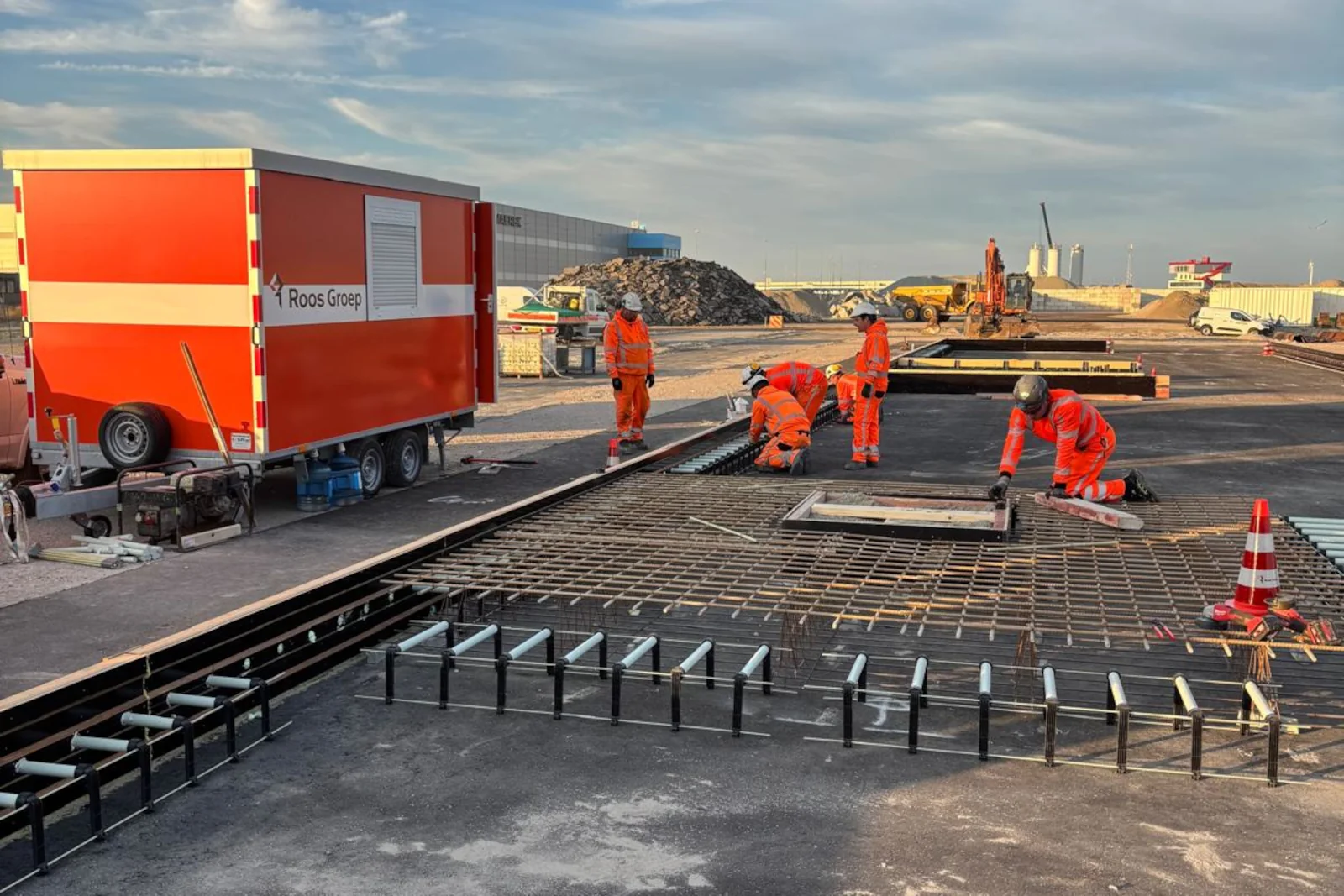
Fiber Dowels applies fiberglass rebar in infrastructure projects, including longitudinal pavement joints.
Learn more about the biggest pros and cons of fiberglass rebar.
Why Fiberglass Rebar Is Used Instead of Steel
The correct reinforcement depends on the structure, loads and environment. GFRP is commonly selected for four reasons.
Corrosion resistance
Fiberglass rebar does not rust when exposed to moisture, de-icing salts or seawater. This reduces the risk of corrosion-related cracking, spalling and repairs.
Lightweight installation
GFRP can be up to four times lighter than steel. This simplifies transport, unloading and manual installation while reducing physical strain on site.
Electromagnetic neutrality
Fiberglass reinforcement is non-magnetic and non-conductive. It can be used near signalling systems, electrical installations, laboratories and medical equipment.
Long-term value
Lower transport requirements, faster handling and reduced corrosion-related maintenance can lower the total lifecycle cost of a concrete structure.
Fiberglass Rebar Uses in Construction and Engineering
Fiberglass rebar applications range from concrete pavements to specialist structures. The following uses show where its properties provide clear engineering value.
Roads and concrete pavements
Roads, airport pavements and industrial floors face heavy loads, moisture and de-icing salts. GFRP provides corrosion-free reinforcement with lightweight installation.
At transverse joints, fiberglass dowels transfer loads while allowing slab movement. Pre-assembled fiberglass dowel baskets help maintain correct alignment during concrete placement.
Bridge decks and viaducts
Bridge decks are exposed to water and chlorides. GFRP prevents reinforcement corrosion and can reduce long-term deterioration in decks, approach slabs and barriers.
Marine and coastal structures
Seawalls, quays and waterfront structures operate in aggressive saltwater environments. Corrosion-resistant fiberglass reinforcement supports a longer service life with fewer maintenance demands.
Tunnels and underground works
Underground structures often combine moisture with limited repair access. GFRP is suitable for walls, shafts and wet tunnel environments.
Its cuttability can also be valuable in soft-eye sections through which tunnel-boring equipment must pass.
Parking structures
Vehicles carry water and road salt into parking facilities. Fiberglass rebar reduces corrosion risk in decks and ramps, while its low weight supports efficient handling during renovations.
Water and wastewater infrastructure
Tanks, channels, treatment plants and basins remain exposed to moisture and chemicals. GFRP helps reduce reinforcement deterioration in these demanding conditions.
Rail and tram crossings
Non-conductive reinforcement can be valuable near signalling, detection and traction systems. Fiberglass rebars and dowels can be applied in track slabs and concrete crossings when approved for the project design.
MRI and sensitive facilities
Hospitals, laboratories and research centres may require non-magnetic reinforcement. GFRP reinforces concrete without introducing conventional ferrous materials near sensitive equipment.
Precast concrete elements
Lightweight fiberglass reinforcement simplifies the production, lifting and transport of precast components. Required curves and shapes must be specified in advance because GFRP bars cannot be bent on site like steel.
See the Fiberglass Rebar Tying Guide for correct positioning and installation.
Industrial and chemical plants
Industrial floors and containment structures may be exposed to salts, acids or cleaning agents. GFRP provides a durable reinforcement option in areas where steel can corrode quickly.
Applications and Main Benefits
| Application | Main engineering benefit |
| Roads and pavements | Corrosion resistance and easy handling |
| Bridge decks | Resistance to chlorides |
| Marine structures | Resistance to saltwater corrosion |
| Tunnels | Moisture resistance and cuttability |
| Parking structures | Resistance to de-icing salts |
| Water infrastructure | Moisture and chemical resistance |
| Rail crossings | Electromagnetic neutrality |
| Precast elements | Low weight and durability |
| Industrial plants | Chemical resistance |
Does Fiberglass Rebar Fit Your Project?
Fiberglass reinforcement is particularly effective where moisture, chlorides, chemicals, low weight or electromagnetic sensitivity affect the design.
It is not a universal steel replacement. GFRP has different stiffness, anchorage and failure characteristics. The engineer must assess:
- Structural loads and deflection
- Crack-width control
- Environmental exposure
- Anchorage and lap lengths
- Fire and temperature requirements
- Applicable standards
- Installation procedures
GFRP must be designed as a separate reinforcement material rather than used as a direct bar-for-bar steel replacement.
Fiber Dowels can help you evaluate the application and provide product specifications, technical documentation and project-specific advice.
Frequently Asked Questions
What is fiberglass rebar used for?
Fiberglass rebar is used in roads, bridge decks, marine structures, tunnels, parking facilities, water infrastructure, precast elements and industrial projects.
Why use fiberglass rebar instead of steel?
GFRP is selected because it does not rust, is lightweight and does not conduct electricity. These properties can simplify installation and reduce long-term maintenance.
Is fiberglass rebar as strong as steel?
GFRP has high tensile strength, but it behaves differently from steel. It has a lower modulus of elasticity and does not yield in the same way. The structure must therefore be designed specifically for GFRP.
How long does fiberglass rebar last in concrete?
Fiberglass reinforcement is designed for long-term use and does not suffer from reinforcement rust. The actual service life depends on the resin, loads, temperature, concrete environment and installation quality.
Can fiberglass rebar be used in roads and bridges?
Yes. It is used in bridge decks, approach slabs, concrete roads, industrial pavements and joints between concrete slabs.
Can GFRP be used in marine environments?
Yes. Its corrosion resistance makes it suitable for seawalls, quays and coastal concrete structures.
Where should fiberglass rebar not be used?
GFRP requires careful evaluation in structures that depend on high stiffness, steel-like ductility, on-site bending or welded connections. Fire exposure and local regulations must also be considered.
Build Lighter and More Durable
The correct reinforcement affects more than the initial material price. It also influences transport, installation, maintenance and service life.
Fiber Dowels supports contractors, engineers and project owners with lightweight, corrosion-resistant reinforcement for roads, industrial pavements and transport infrastructure. Get in touch!