
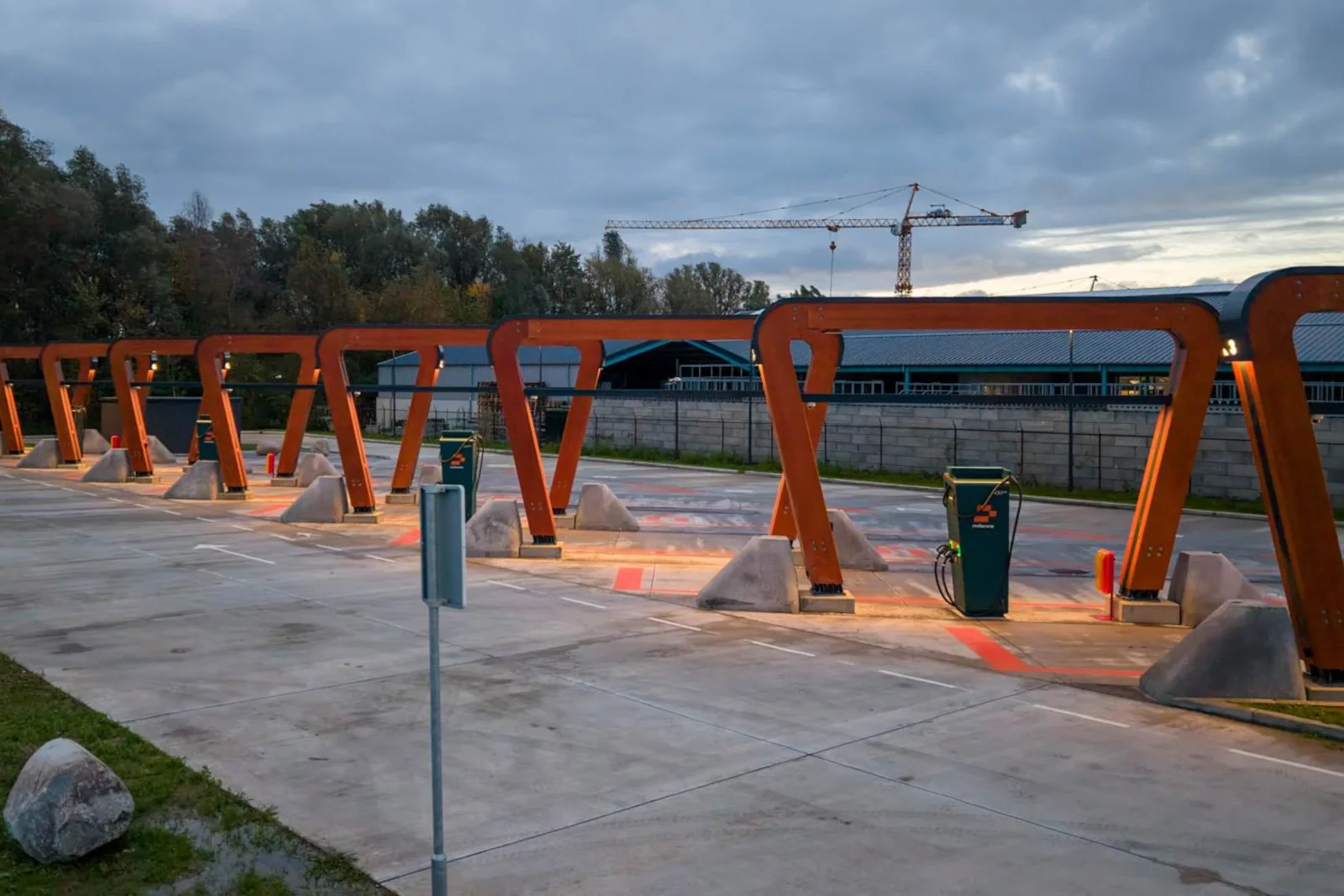
In Padborg, Milence opened its first public charging hub in Denmark, focused on reliable charging for electric freight transport between Scandinavia and Central Europe.
Project in figures
- Sector:
Electric freight transport / charging infrastructure - Application:
Heavy-duty concrete pavement around truck charging bays - Location:
Padborg, Denmark - Solution used:
Fiber Dowels fiberglass products - Key challenge:
Creating a durable, low-maintenance pavement for intensive use by e-trucks and charging infrastructure. - Result:
A future-ready charging hub at a strategic logistics location on the border between Denmark and Germany.
About the customer
Milence is developing a European public charging network for heavy-duty electric road transport. The organisation is a joint venture between Daimler Truck, TRATON GROUP and Volvo Group, and focuses on charging solutions for e-trucks along key European transport routes.
The hub in Padborg is a strategic step in Milence’s expansion across Northern Europe. Located near the border between Denmark and Germany, it forms an important link for freight traffic between Scandinavia and Central Europe.
Milence’s technical challenge
A charging hub for electric freight transport requires more than charging stations alone. The subbase and concrete pavement must withstand heavy axle loads, turning movements, braking forces and intensive daily use.
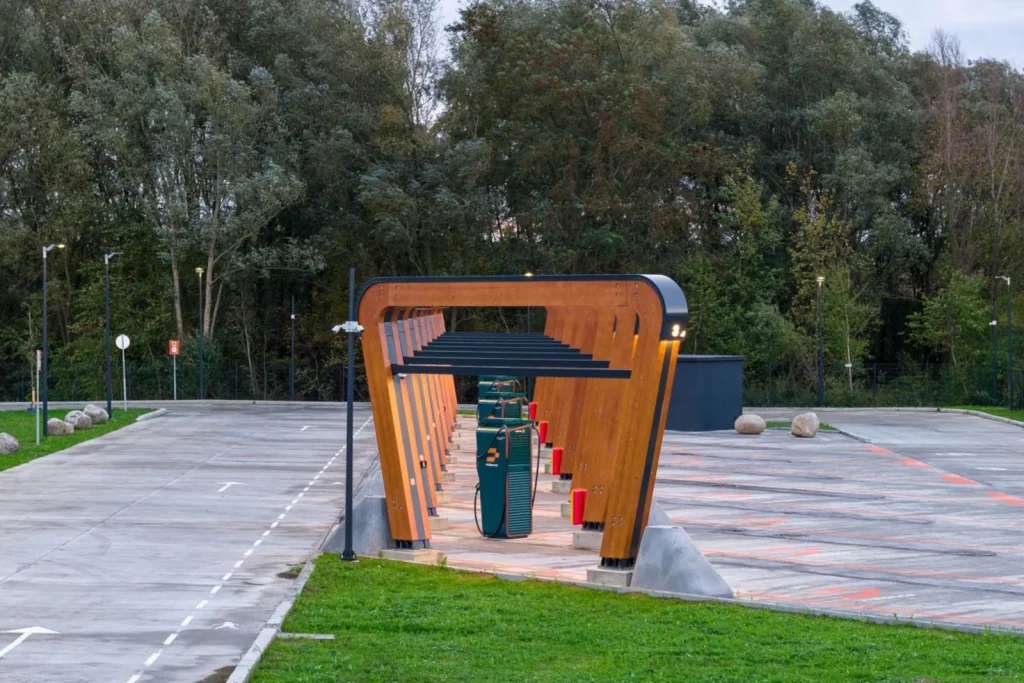
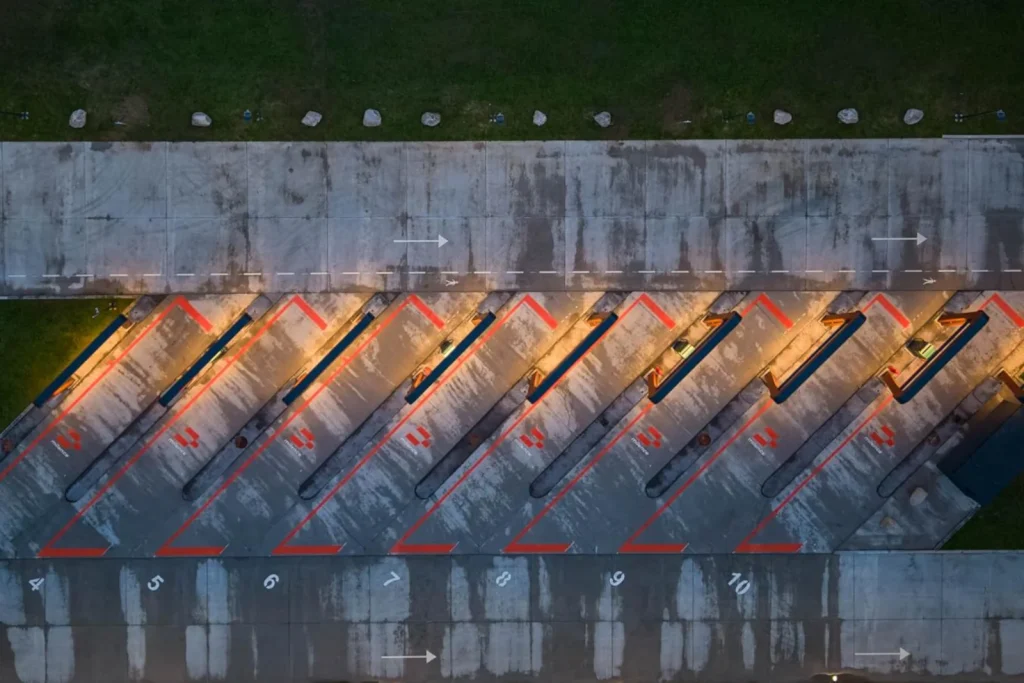
In Padborg, the project involved a public charging location with four dedicated charging bays and four CCS chargers up to 400 kW in the first phase. This means the pavement not only needs to be strong, but also remain reliable under repeated loading.
For this type of infrastructure, low-maintenance construction is essential. Any downtime around charging bays has a direct impact on availability, planning and traffic flow. That is why it is important to choose materials during the design phase that contribute to a longer service life and reduced maintenance.
Why standard solutions were not enough
In heavy-duty concrete pavements, dowels and rebars are used to transfer loads effectively between concrete slabs. In logistics environments, moisture, de-icing salts, temperature fluctuations and intensive traffic all play a major role. This makes corrosion resistance especially important.
Fiber Dowels’ glass-fiber-reinforced solutions are rust-free, lightweight and environmentally friendly. They help prevent damage caused by corrosion and make installation easier on site. Our Fiberglass Dowels are suitable for concrete pavements in road construction, industrial floors, airports and container terminals, among other applications.
Fiberglass tie bars can also be used in longitudinal joints to create a strong connection between adjacent concrete slabs. For projects where speed matters, lightweight materials reduce lifting work, lower transport loads and support accelerated construction processes.
How we helped Milence
For the charging hub in Padborg, Fiber Dowels supplied fiberglass products. The selected solution supports a strong, low-maintenance concrete structure for a location used daily by heavy electric trucks.
The lightweight installation makes on-site handling easier. This is especially valuable in projects where planning, safety and construction speed come together. Fiberglass products are up to four times lighter than steel, making transport and handling more efficient.
Engineering insight
At logistics charging locations for e-trucks, high loads are concentrated on a relatively compact surface. This includes slow-manoeuvring trucks, stationary loads during charging and recurring wheel paths across the same zones.
That is why effective load transfer between concrete slabs is important. Fiberglass Dowels provide joint stability and help reduce height differences between slabs. In corrosive or humid conditions, GFRP offers an additional advantage: the material does not rust. As a result, its structural function is maintained without expanding rust affecting the concrete.
For clients, this means a low-maintenance solution with a longer service life. For contractors, it means lighter handling and reduced physical strain during installation.
Technical specifications
- Project:
Milence charging hub Padborg - Location:
Padborg, Denmark - Type of infrastructure:
Public charging location for heavy-duty electric freight transport - Charging hub phase 1:
4 charging bays and 4 CCS chargers up to 400 kW - Material:
GFRP, glass-fiber-reinforced polymer - Key benefits:
Rust-free, lightweight, corrosion-resistant, sustainable and suitable for heavy-duty concrete pavements.
Contact us
Do you have questions about Fiber Dowels or our products? Get in touch with us. We will be happy to help.